
The insurance landscape in 2026 is defined by one clear reality: competition is intensifying while customer expectations continue to rise. As acquisition costs climb and digital channels evolve, relying on intuition is no longer enough. Growth now depends on understanding what the data actually reveals.
Insurance marketing statistics offer a clear, evidence-based view into how modern consumers behave, from their first search query to the moment they purchase a policy and beyond. At QuoteFlow Marketing, we bring together the most relevant and verified insurance marketing statistics covering consumer behavior, search trends, paid media, personalization, AI adoption, and conversion performance.
Key Insurance Marketing Statistics Shaping 2026
Insurance marketing statistics in 2026 consistently point toward a digital-first but trust-driven ecosystem. Here’s the most prominent statistics:
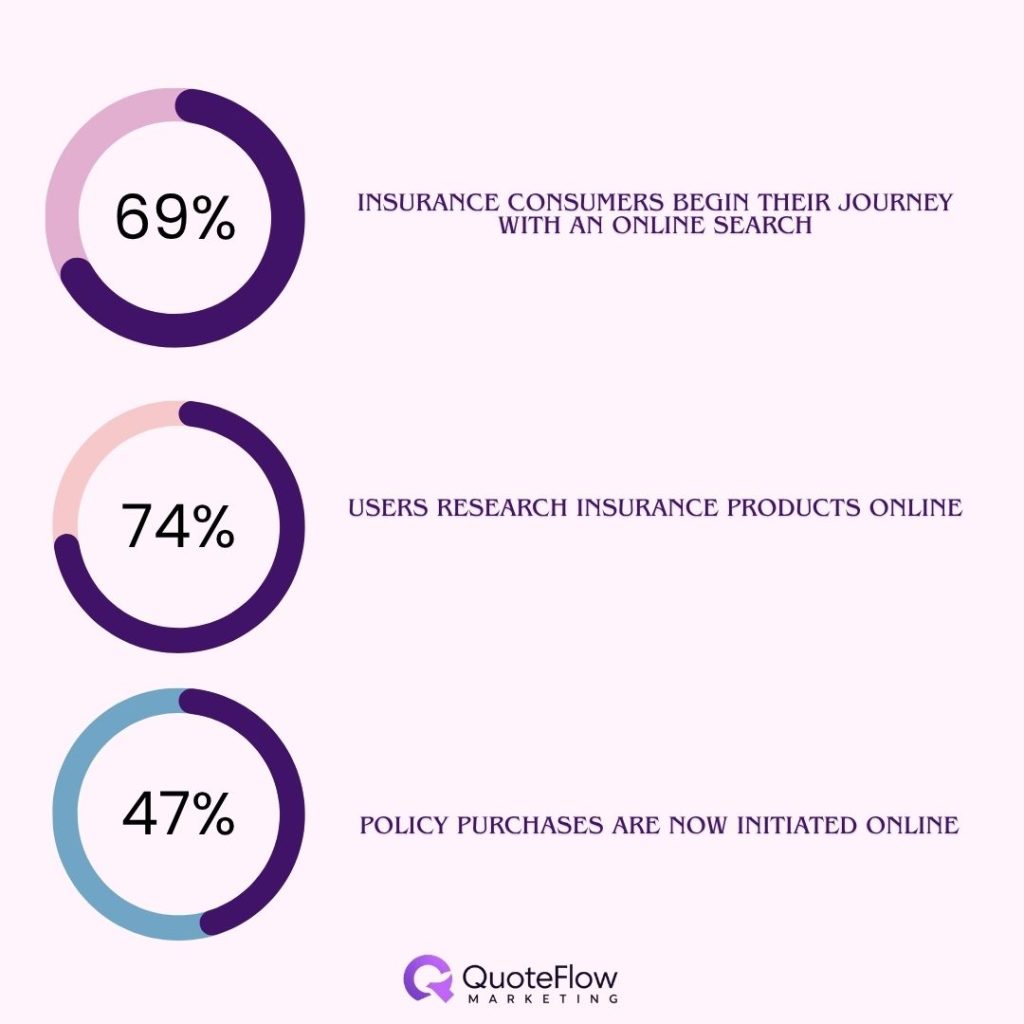
- Around 69% of insurance consumers begin their journey with an online search, confirming that visibility on search engines remains foundational.
- 74% of users research insurance products online before making any decision, showing how informed today’s buyers have become.
- 74% of users abandon purchases due to feeling overwhelmed.
Digital influence continues to grow, with nearly 47% of policy purchases now initiated online. However, the journey rarely ends there. Around 78% of consumers contact a business after searching, often choosing to call directly, which reinforces the importance of high-intent touchpoints.
The economics of the industry are equally striking. Insurance keywords can exceed $50 per click, placing the sector among the most expensive in paid search. Despite this, the average search ad conversion holds around 7.25% as per last year, which remains profitable due to high customer lifetime value.
Taken together, these insurance marketing statistics show a clear pattern: search drives discovery, trust drives decisions, and personalization drives loyalty.
Insurance Consumer Behavior Statistics Driving Decisions
Insurance marketing statistics consistently reveal that consumer behavior is both digital and deeply human.
- Around 68% of users begin their journey without a specific insurer in mind, which creates a significant opportunity for brands that rank early and build trust quickly.
- Research plays a central role, with nearly three-quarters of consumers exploring options online before purchasing. However, despite this digital activity, only about 25% complete the entire process online. A large portion of users still encounter friction, with roughly 75% reporting difficulties during digital purchase journeys.
- Human interaction remains highly influential. Approximately 62% of consumers say that speaking with an agent is the most important step in their decision-making process. This aligns with another critical insight: while digital channels initiate interest, trust is often finalized through direct communication. But that isn’t the preferred option if waiting 15 minutes on the line is in question. In that case, 62% would choose the chatbot option rather than having to wait 15 minutes just to speak to an agent.
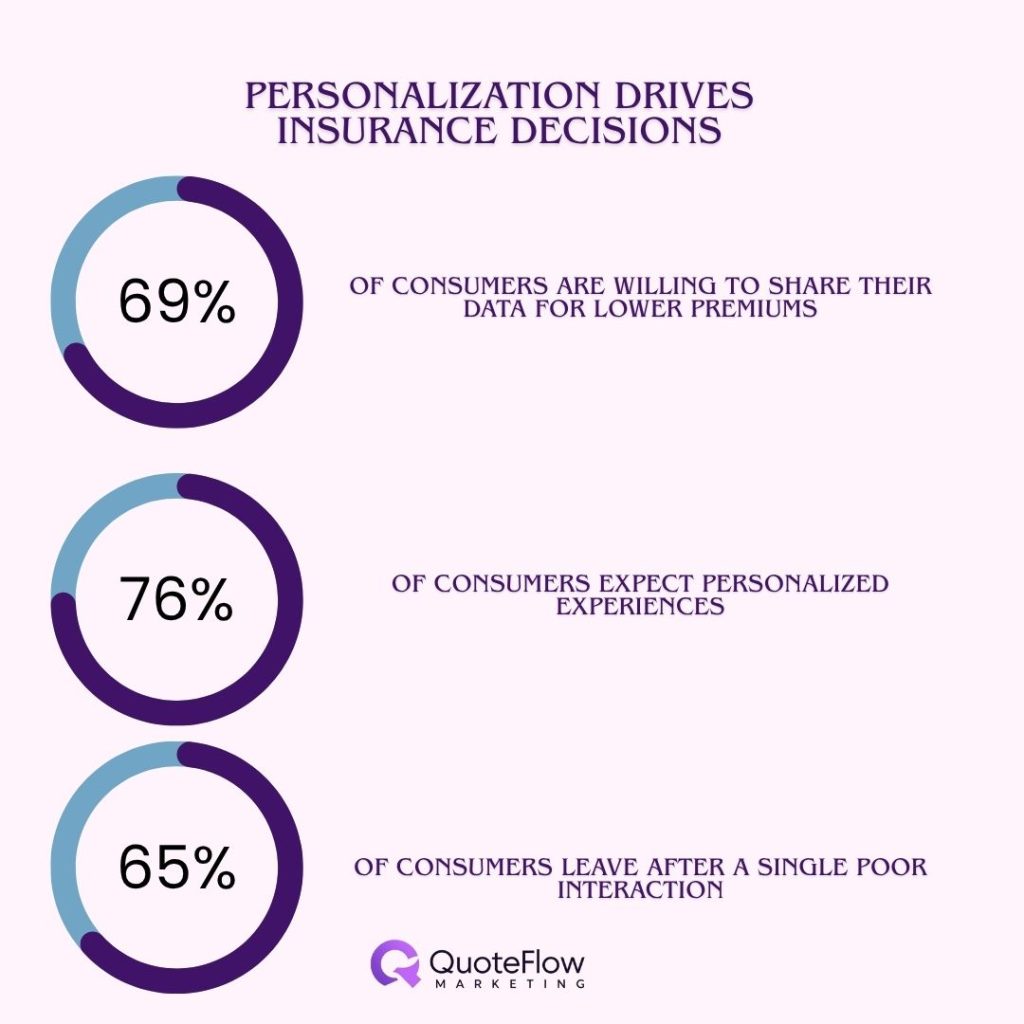
- Personalization also plays a decisive role. Around 69% of consumers are willing to share their data in exchange for lower premiums, yet 76% express frustration when personalization is lacking. At the same time, poor experiences carry heavy consequences, with about 65% of users leaving after a single negative interaction.
These insurance marketing statistics highlight a powerful balance. That is digital convenience must be paired with human reassurance and seamless experiences to convert effectively.
Insurance Digital Marketing Statistics and Search Trends
Search remains the backbone of insurance marketing, and the latest insurance marketing statistics reinforce its dominance. Nearly 69% of all insurance journeys begin on search engines, making organic visibility and paid search essential components of any strategy.
Mobile behavior continues to grow, with over half of insurance-related searches now happening on mobile devices. This shift has made page speed and mobile optimization critical, as even small delays can increase bounce rates by more than 30%.
Local intent is also rising rapidly. Searches that include location-based queries—such as “insurance near me”—have grown significantly, indicating that proximity and convenience influence decisions more than ever.
These trends highlight why insurance SEO services are becoming a core growth channel for agencies looking to capture high-intent searches.
Insurance Paid Advertising Statistics and Cost Dynamics
Paid advertising remains one of the most competitive aspects of insurance marketing, and the latest insurance marketing statistics confirm why.
Despite the high costs, the industry continues to invest heavily, with digital ad spend exceeding $14 billion in major markets. This investment is justified by strong returns, as search ads convert at an average rate of around 5.1%, while display advertising typically falls between 1% and 2%.
Retargeting plays a crucial role in improving efficiency. Users who are retargeted are significantly more likely to convert, especially in a category where decision cycles are longer and more research-driven.
What makes these insurance marketing statistics particularly important is the role of lifetime value. Insurance customers often generate long-term revenue, which allows companies to justify higher upfront acquisition costs.
In this context, paid advertising is not just about immediate conversions, it is about long-term profitability.
AI and Automation Statistics Transforming Insurance Marketing
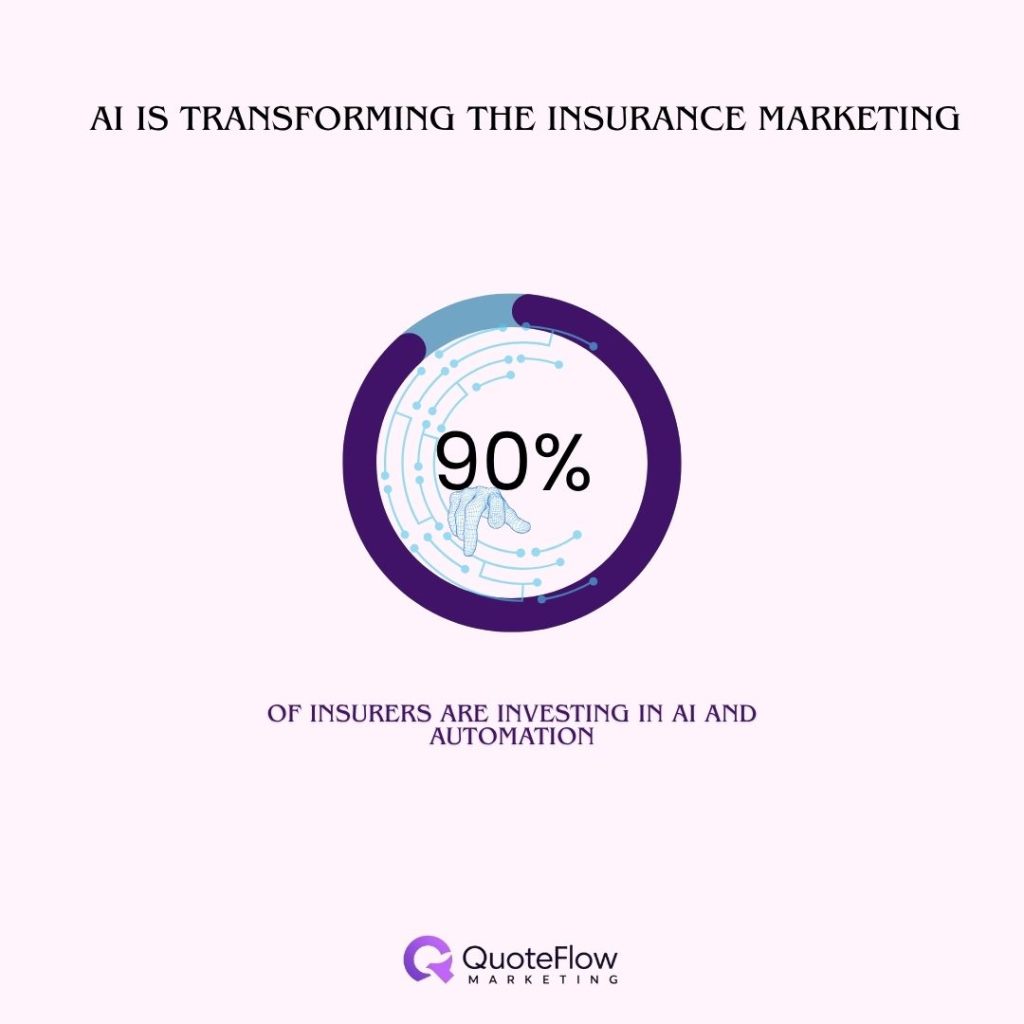
Artificial intelligence is rapidly reshaping the industry, and insurance marketing statistics show that adoption is accelerating. Around 90% of insurers are currently investing in AI technologies, although only a smaller percentage have fully scaled implementations. As per the latest statistics of Fortune Business Insights, the global AI in the insurance market is projected to grow from $13.45 billion in 2026 to $154.39 billion by the end of 2034. Also, statistics show that last year North America dominated the global AI insurance market with a market share of 39.96%.
AI is improving multiple aspects of marketing, from audience targeting to predictive analytics. It enables insurers to identify high-intent prospects, optimize bidding strategies, and deliver more personalized experiences.
Chatbots and automation tools are also becoming standard, handling early-stage interactions and reducing response times. This not only improves efficiency but also enhances the customer experience.
Lead Generation and Conversion Statistics
Conversion remains the most critical stage of the funnel, and insurance marketing statistics reveal where the real value lies. Phone calls consistently outperform digital leads, converting 10 to 15 times higher than web-based inquiries.
Callers also tend to convert faster and show higher retention rates, which makes call-focused strategies particularly valuable. Features like click-to-call have further increased mobile conversions, especially among high-intent users.
Speed plays a decisive role. Faster response times significantly improve conversion rates, as users often contact multiple providers before making a decision.
Modern customer journeys are rarely linear. Most involve multiple touchpoints across channels, which makes attribution more complex but also more important.
These insurance marketing statistics highlight that optimizing for conversion requires a combination of speed, accessibility, and human interaction, which is why many agencies rely on lead generation solutions to improve response times and capture high-intent prospects.
Data Privacy and Trust Statistics in Insurance Marketing
Trust is the foundation of insurance, and insurance marketing statistics clearly reflect its importance. Around 93% of consumers say they would lose trust in a company if their data is mishandled, which highlights the critical role of privacy.
Global privacy regulations are becoming stricter, affecting billions of users and reshaping how marketers collect and use data. At the same time, the decline of third-party cookies is forcing a shift toward first-party data strategies. Transparency has become a competitive advantage. Brands that clearly communicate how they use data are more likely to build strong, lasting relationships with customers.
Conclusion
Insurance marketing statistics paint a clear and actionable picture. Search remains the dominant discovery channel, while trust and personalization drive decision-making. Phone calls and human interaction continue to play a crucial role in conversions, even in a digital-first world.
AI is transforming how marketers identify and engage with prospects, while privacy considerations are reshaping data strategies. At the same time, content and customer experience are becoming increasingly important in building long-term relationships.
The most successful insurers are those that align all these elements, combining data-driven insights with human-centered strategies to create seamless, trustworthy experiences.